Alarm system costs in South Africa, decoded
What drives the price of a home alarm system in South Africa — panel, zones, detectors, monitoring fees — and which upgrades actually change your risk.
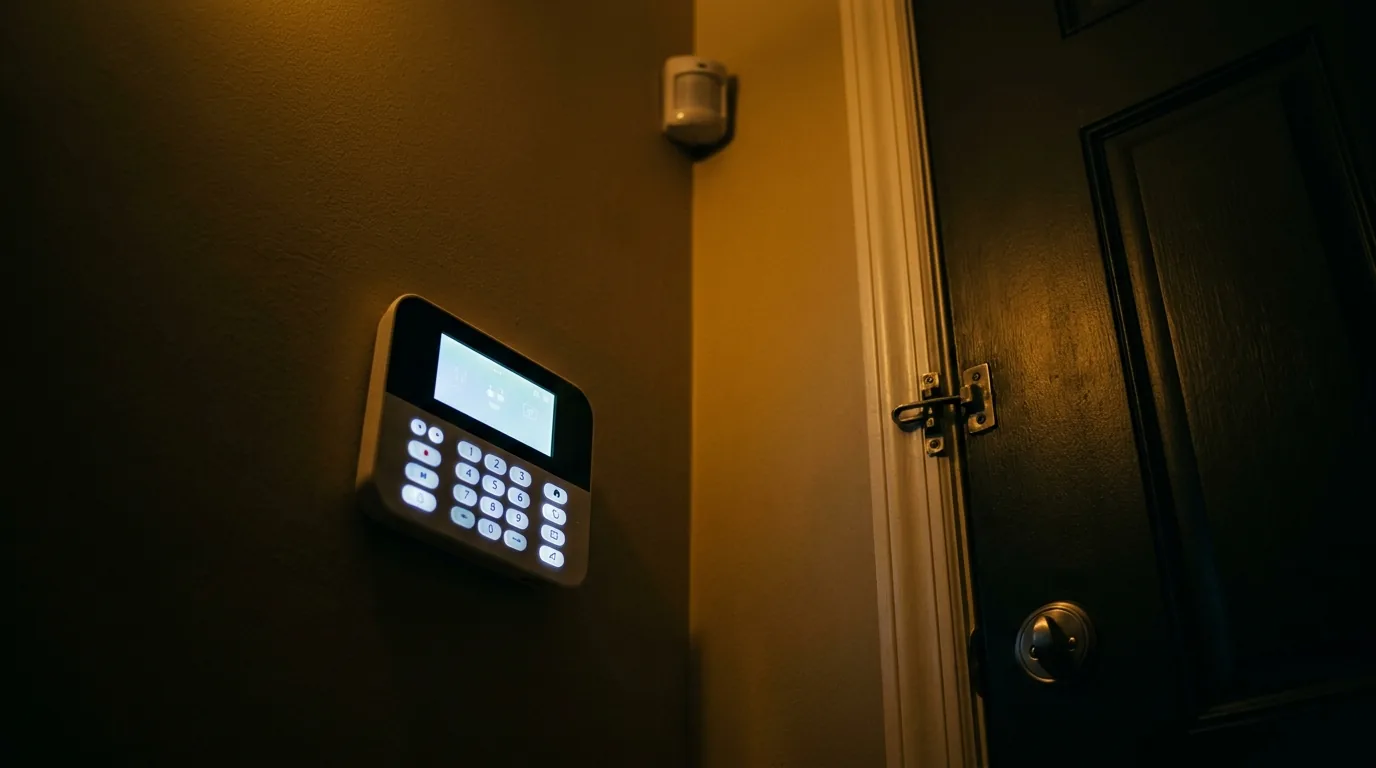
An alarm quote has two numbers in it, and most people only look at the first. The installation is once. The monitoring fee is forever. Getting the balance right — and knowing which parts of the system you are actually paying for — is the difference between an alarm you trust and one you eventually stop arming.
The short version
- The panel and detectors are a smaller share of the cost than most people expect. Zoning and labour carry it.
- Monthly monitoring fees compound. Over five years they usually exceed the installation price.
- Wireless is not automatically cheaper — it trades cable labour for battery maintenance.
- Outdoor detection costs more and is the single biggest upgrade to how early you know.
- A system you stop arming has a hundred percent failure rate, whatever it cost.
The anatomy of an alarm quote
An alarm system is a panel, a means of telling you and somebody else that it has triggered, and a set of detectors that decide what counts as an event. The quote splits along those lines, but the labour to place and wire the detectors correctly is usually the largest single component and the easiest to under-scope.
Panels differ mainly in how many zones they support, whether they can be expanded later, and how they communicate. That last point has quietly become the most important one: a panel that reports over a mobile network and an app behaves very differently from one that depends on a landline that no longer exists.
| Component | Function | What changes the price |
|---|---|---|
| Control panel | Runs the system and reports events | Zone capacity, expandability, communicator type |
| Keypad / app | How people arm, disarm and read the system | Number of keypads, app and remote-arming support |
| Indoor detectors | Detect movement inside protected spaces | Count, pet immunity, mounting difficulty |
| Perimeter detection | Detect approach before entry | Beams, outdoor PIRs, fence integration, cable runs |
| Contacts & panics | Doors, windows, duress buttons | Count and wiring route |
| Siren & strobe | Local deterrent and signalling | Indoor plus outdoor, tamper protection |
| Battery & power | Keeps the system alive through outages | Battery size, charger quality, surge protection |
| Labour & commissioning | Design, install, walk-test, hand over | Property size, wiring method, documentation |
The number that matters most is monthly
Published 2026 guidance puts South African monthly monitoring and armed-response fees in a range that, over a five-year horizon, comfortably exceeds what most homeowners pay for the installation itself. That does not make monitoring bad value — a signal nobody receives is not protection — but it does mean the monthly figure deserves at least as much scrutiny as the once-off.
Ask what the fee actually buys. Signal monitoring only? Armed response included, or per-call-out? How many false-alarm call-outs before you are charged? What is the contract term, and what happens to your equipment if you leave? These answers vary far more between providers than the headline rand figure does.
- Signal monitoring only — the control room receives events and phones you.
- Monitoring plus armed response — a vehicle is dispatched, usually with a call-out allowance.
- Self-monitoring via app — no monthly fee, but you are the control room.
- Hybrid — app notifications for the household plus a monitored panic path.
WSN note:Whatever you choose, write down what is meant to happen at 02:00 when the alarm goes and nobody answers the phone. If the answer is unclear, that is the gap in the system, not the hardware.
Wired, wireless or hybrid
Wireless is often pitched as the cheaper option because it removes cable labour. On an occupied home with finished ceilings, that can be true. What it introduces instead is battery maintenance across every device and a dependency on signal quality through walls that were not built with radio in mind.
Wired systems cost more to install and less to keep alive. They are the better default in new builds, renovations, and anywhere a roof void gives easy access. Hybrid systems — a wired backbone with wireless devices in the awkward places — are what most real properties end up with, and there is nothing wrong with that as long as it was a decision rather than an accident.
| Approach | Best suited to | Ongoing cost |
|---|---|---|
| Wired | New builds, renovations, accessible roof voids | Low — panel battery only |
| Wireless | Occupied homes, heritage finishes, quick expansion | Device batteries on a schedule |
| Hybrid | Most existing homes | Between the two; depends on device count |
The upgrade that changes the most
If you only have budget for one improvement beyond a standard indoor system, spend it outside. Indoor detection tells you somebody is already in the house. Outdoor detection — beams across an approach, outdoor PIRs covering a side passage, an electric fence integrated into the panel as a zone — tells you while there is still a wall between you and the problem.
That earlier signal is what makes armed response useful, what gives a household time to get to a safe room, and what turns a camera from a post-incident record into a live check. It also has a cost most people underestimate: outdoor devices are exposed to weather, foliage and animals, and they are the leading source of false alarms if they are placed carelessly.
The answer is not to avoid outdoor detection. It is to place it deliberately, keep vegetation off it, and choose devices designed for outdoor discrimination rather than indoor detectors mounted outside.
- Beams across the approach a vehicle or person must cross, not across a busy garden path.
- Outdoor PIRs aimed away from heat sources, driveways with turning traffic and swaying plants.
- Electric fence energiser reported into the panel as its own zone, so a cut line is an event.
- A maintenance habit: trim back growth twice a year and walk-test after any garden work.
The hidden cost of a noisy system
False alarms have a financial cost in call-out fees, and a much larger behavioural cost. A system that cries wolf gets partially disarmed: the beam zone is bypassed, the outside PIR is left off, and eventually the whole thing is armed only when the family goes away. At that point the money is spent and the protection is not there.
South African response companies consistently name the same causes: faulty or ageing equipment, flat batteries after power interruptions, doors and windows not properly secured, incorrect installation, and pets, rodents and insects. Almost all of them are design and maintenance problems rather than bad luck.
WSN note:A system that is armed every night at a modest specification beats an elaborate one that gets armed twice a month. Design for the way the household actually lives.
What to ask before you sign
Alarm quotes are easier to compare than CCTV quotes because the device list is explicit. The differences hide in zoning, in commissioning, and in what happens after handover.
- 01Ask for the zone list in plain language — "kitchen passage", not "Zone 4".
- 02Ask whether every zone will be walk-tested with you present before handover.
- 03Ask what stay-mode looks like: which zones stay live while the family is asleep.
- 04Ask what the panel does on power failure, and how long the battery is expected to hold.
- 05Ask how you will know a battery is dying before it fails.
- 06Ask what the false-alarm policy is, and what a call-out costs beyond the allowance.
- 07Ask who owns the equipment at the end of a monitoring contract.
Certification is not a formality
Ask who is actually doing the work and what they are certified on. Manufacturer certification — IDS on the panels most commonly installed in South African homes, for example — is the difference between a system configured to its design and one wired to whatever the installer remembered. It also matters for warranty claims and for the next technician who has to work on it.
A related question worth asking: is the person quoting the person installing? On many jobs a salesperson quotes and a subcontracted team installs. There is nothing inherently wrong with that model, but you should know which one you are buying, because accountability follows the person who was actually on site.
Common questions
How much does a home alarm system cost in South Africa?
Published 2026 guidance places typical residential systems across a broad band, with more advanced systems and professional monitoring at the upper end. The installation figure depends on zone count, wiring method and property size; the monitoring fee is a separate ongoing cost that usually exceeds the installation over five years.
Is a wireless alarm cheaper than a wired one?
Cheaper to install, usually. Not cheaper to own. Wireless removes cable labour but adds battery replacement across every device and a dependency on signal quality. Most existing homes end up with a sensible hybrid.
Do I need armed response, or is app monitoring enough?
It depends on who is available to act on an alert and how quickly. App notifications work when someone reliably sees and acts on them. Armed response exists for the hours when nobody does. Decide by writing down what should happen at 02:00 and seeing whether your setup delivers it.
Why does my alarm keep triggering for no reason?
The common causes are ageing detectors, flat batteries after power interruptions, doors or windows not fully secured, incorrect placement, and pets or insects. Nearly all are fixable — the fix begins with recording exactly which zone triggers and when.