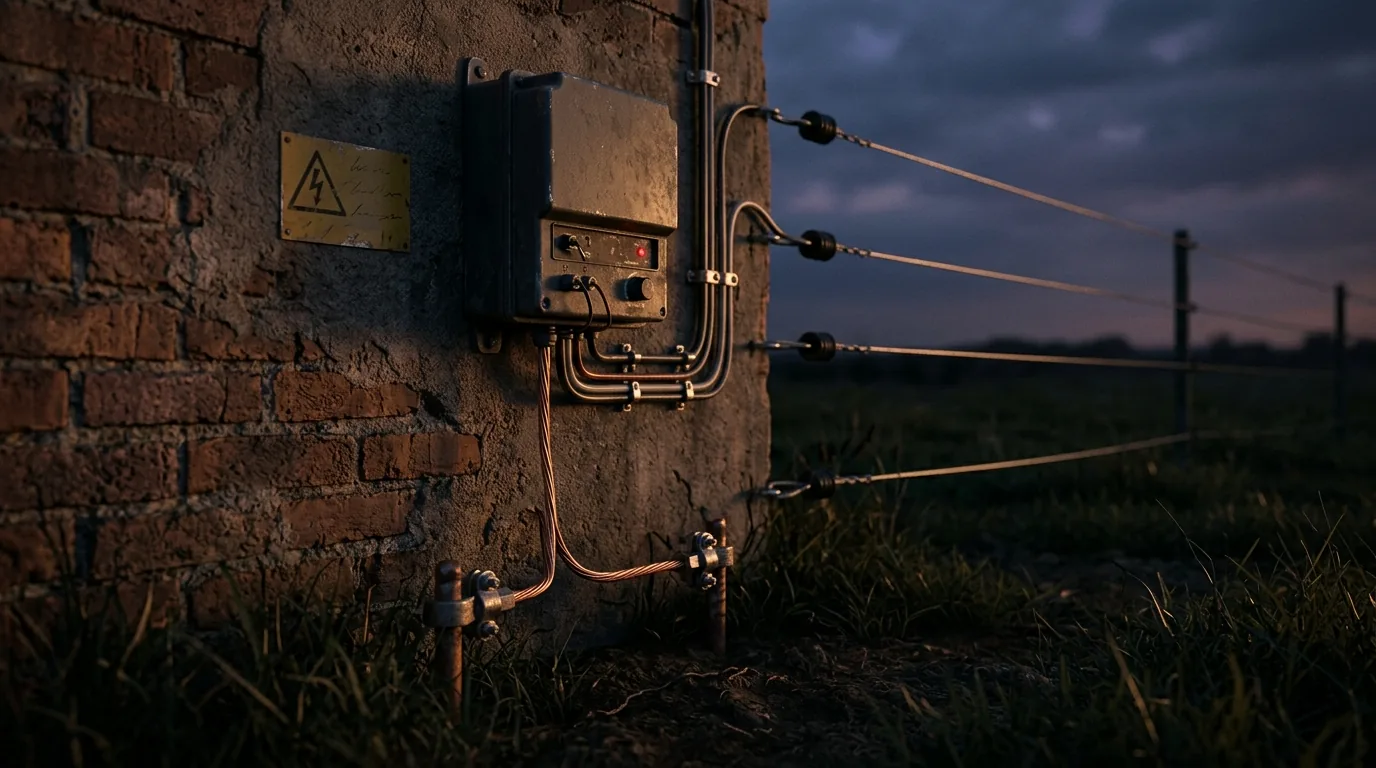
Electric fencing, installed to the standard
Electric fencing is the layer that buys you time, and it is the one with real legal weight attached. We install and maintain systems that hold their tension, report into the alarm panel, and stand up to a compliance inspection.
A fence that nobody is watching
The most common electric fence failure is not a breach. It is a fence that has been dead for a week and nobody knew, because the energiser was never reported into the alarm as its own zone and the indicator light lives in a garage nobody enters.
The second is compliance. Certificates are triggered by alterations as well as sales, they now expire after two years, and they can only be issued by a registered installer. Most homeowners discover all three facts at the same time, three weeks before transfer.
01 / Scope
What we install
- Wall-top electric fencing
- Free-standing electric fencing
- Piggyback systems on existing walls
- Industrial and high-security installations
- Hybrid fencing — electric with razor or palisade
- Zoned systems for large perimeters
- Solar-powered energisers
- Monitored and alarm-integrated systems
- Anti-dig and barrier fencing
- Game and agricultural fencing
- Repairs, re-tensioning and energiser replacement
02 / Method
How we approach it
The fence reports into the alarm
Energiser status and tamper come back as their own zones. A cut line becomes an event instead of a surprise.
Compliance built in, not bolted on
Signage, earthing, clearances and gate handling are done to the standard during installation, so certification is a formality rather than a remedial job.
Zoned on larger perimeters
On a long boundary, one zone tells you the fence is down. Several tell you where.
Maintained on a schedule
Tension, vegetation and earthing drift over a season. A fence checked twice a year holds its performance; one checked never does not.
03 / Process
From first walk to handover
- 01
Perimeter walk
The whole boundary, including the sections behind the garage nobody looks at. Climbing aids, vegetation and gaps are noted.
- 02
Design and quote
Zoning, energiser sizing, power and backup, integration with the alarm, and the compliance position stated up front.
- 03
Installation
Brackets, insulators, tensioning, earthing, signage and gate handling installed to SANS 10222-3.
- 04
Integration
Energiser and tamper reported into the alarm panel so a fault is visible to somebody.
- 05
Certification
Where required, an Electric Fence System Certificate of Compliance is issued by a registered installer.
- 06
Maintenance
Tensioning, vegetation clearance, earthing checks and energiser servicing on a scheduled visit.
04 / Ask anybody
Questions worth asking
Ask these of us, and of anyone else quoting you. A good installer welcomes them.
- Will the energiser report into my alarm panel as its own zone?
- Is my current installation compliant, and when does my certificate expire?
- How many zones does a perimeter this size actually need?
- What happens to the fence during a power outage?
- What does the annual maintenance visit cover?
Common questions
Do I need a certificate of compliance for my electric fence?+
If the system was installed after 1 October 2012, yes. A valid certificate is also required before a property transfer can be concluded, and alterations to an existing system trigger a fresh certificate.
How long is an electric fence COC valid?+
Since September 2021, two years from date of issue. Older guidance suggesting an open-ended validity is out of date.
Can an electric fence run during load shedding?+
Yes, on battery backup, and solar energisers extend that further. The battery is the limiting factor, and repeated deep discharge shortens its life considerably — which is why we size and test it rather than fitting a default.
Read before you buy
Related services
Direct contact
Talk to Werner about electric fencing
The owner does the assessment and the owner does the work. No call centre, no handover gap.