Electric fence COC: what the law actually requires
Who needs an Electric Fence System Certificate of Compliance in South Africa, when it is triggered, how long it lasts and what happens without one.
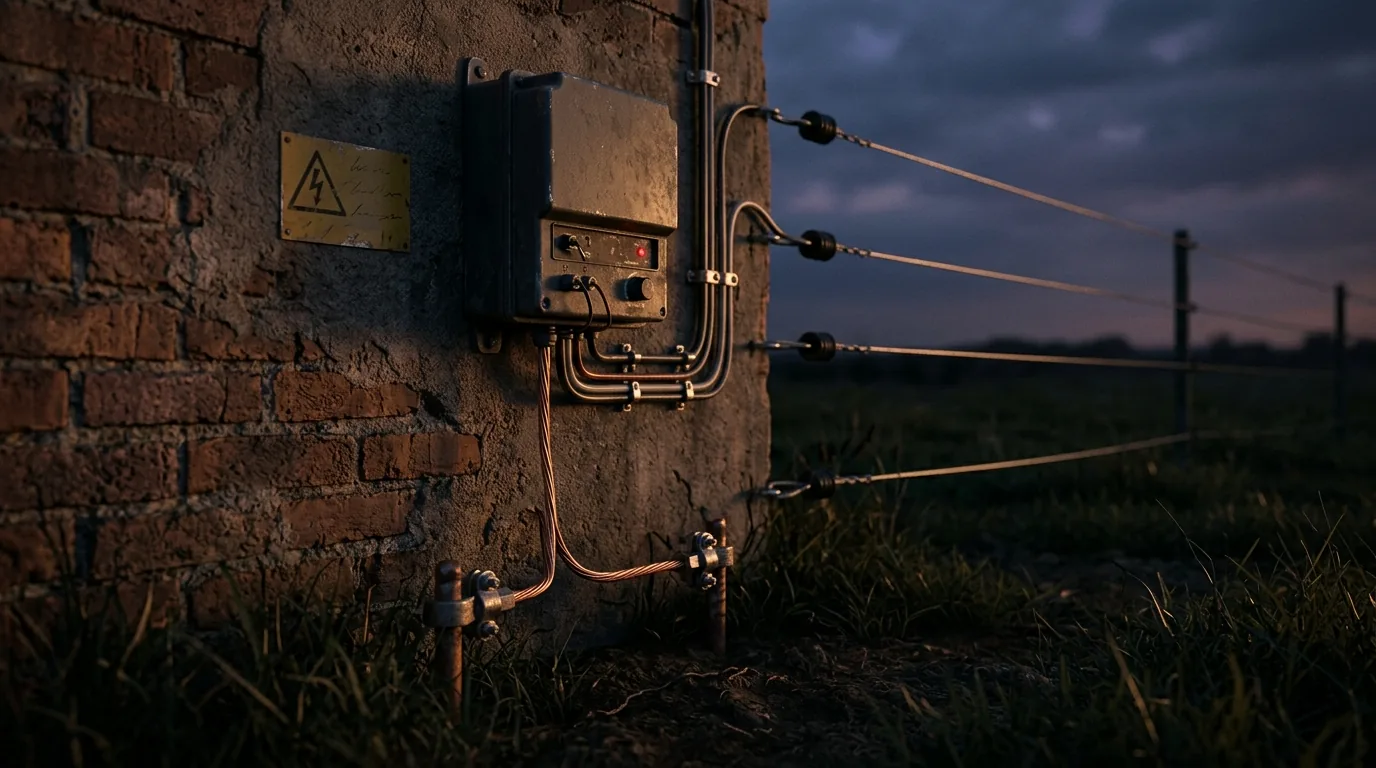
Most homeowners meet the electric fence Certificate of Compliance for the first time in the worst possible circumstances: three weeks before transfer, when a conveyancer asks for it and nobody has one. It is a short document with real legal weight, and understanding when it is triggered saves both money and a delayed sale.
The short version
- Under the Electrical Machinery Regulations, an electric fence system installed after 1 October 2012 requires a valid Electric Fence System Certificate of Compliance.
- A property sale cannot conclude transfer without a valid electric fence COC where one is required.
- Since September 2021 the certificate is valid for two years from date of issue.
- Only an installer registered with the Department of Employment and Labour may issue one.
- Alterations and new installations trigger a fresh certificate — not just a sale.
What the certificate actually certifies
An Electric Fence System Certificate of Compliance (commonly an EFS COC) is a declaration by a registered installer that the system, as installed and as it currently stands, meets the requirements set out in the applicable South African standard, SANS 10222-3, and the Electrical Machinery Regulations made under the Occupational Health and Safety Act.
It is not a receipt, a warranty or a guarantee that the fence will work forever. It is a point-in-time statement about safety and compliance: energiser installation, earthing, warning signage, clearances, gate handling, voltage and pulse characteristics, and the way the system interacts with people who might reasonably come into contact with it.
That distinction matters, because homeowners often assume the certificate protects them against a future fault. It does not. What it does is establish that the installation was compliant when it was assessed, which is what insurers, conveyancers and courts look for.
When you actually need one
The regulation is anchored to a date. Any electric fence system installed after 1 October 2012 requires a certificate. Systems that predate that date are treated differently until they are altered — and "altered" is doing a lot of work in that sentence.
Three situations trigger the requirement in practice, and only one of them is the one most people know about.
- Sale and transfer of the property. A valid certificate must be supplied before transfer can be concluded.
- A new electric fence installation, regardless of whether a sale is happening.
- Alterations or additions to an existing system — extending a run, replacing an energiser, adding a zone.
WSN note:The alteration trigger is the one that catches people. Replacing an energiser after a lightning strike is an alteration. If nobody issues a certificate at that point, you will be doing it under time pressure at transfer.
How long it lasts
Since September 2021, an electric fence Certificate of Compliance is valid for two years from the date of issue. Before that change, certificates were often treated as effectively open-ended provided nothing had been altered, and a lot of outdated advice online still says so.
Two years is short enough that it should be diarised rather than remembered. If you own a property with an electric fence and are not planning to sell, the practical approach is to fold the renewal into a maintenance visit — the inspection required for the certificate is broadly the same inspection that keeps the fence working properly.
Who may issue it — and why that is not negotiable
Only an electric fence system installer registered with the Department of Employment and Labour may issue an EFS COC. This is a specific registration, distinct from a general electrician or a wireman licence. An ordinary electrical COC for the house does not cover the electric fence, and an electrician without the electric fence registration cannot issue one.
This is worth verifying rather than assuming. Ask for the registration number and check that the certificate carries it. A certificate issued by somebody not entitled to issue it is not a defective certificate — it is no certificate at all, and you will discover that at the least convenient moment.
- 01Ask for the installer registration number before work starts, not after.
- 02Confirm the certificate will cover the whole system, not just the section being worked on.
- 03Keep the certificate with the property file, not in a drawer with the manuals.
- 04Diarise the two-year expiry the day you receive it.
- 05Re-certify after any alteration, energiser replacement or storm damage repair.
What happens without one
The consequences fall into three buckets, and they escalate. The first is transactional: a property transfer can be halted while a certificate is obtained, which in a chain of sales is expensive and stressful for everybody involved.
The second is insurance. Insurers may decline a claim connected to a non-compliant installation. That exposure is not limited to claims about the fence itself — it extends to incidents where the fence formed part of the security the policy priced.
The third is liability. Where a non-compliant electric fence causes injury or death, the owner can face legal liability. Electric fencing is regulated precisely because it is a hazard that has to be installed and signposted correctly to be safe around children, animals, contractors and passers-by.
| Area | Practical consequence |
|---|---|
| Property transfer | Transfer cannot conclude; deadlines and chains are affected |
| Insurance | A claim connected to the installation may be rejected |
| Liability | Owner exposure where a non-compliant fence causes injury |
| Compliance | Regulatory exposure under the Occupational Health and Safety Act framework |
What an inspection actually looks at
Understanding the inspection makes it far less intimidating. The assessment is concerned with whether the system is safe and whether it behaves the way the standard requires. That means the energiser and its installation, earthing arrangements, the routing and support of live conductors, clearance from public areas and from things people can climb, warning signage at the required intervals, gate and access handling, and the electrical characteristics of the pulse.
Common failures are mundane: missing or faded warning signs, poor earthing, live conductors too close to a boundary the public can touch, an energiser fed from an unprotected supply, and vegetation or structures bridging the fence. Most are fixable in the same visit.
- Energiser installation, supply and protection.
- Earthing and the earth return arrangement.
- Conductor routing, tension, insulators and clearances.
- Warning signage placement, legibility and interval.
- Gate handling, handles and access points.
- Interaction with other systems — alarm zone reporting, monitoring, backup power.
WSN note:Book the inspection before you list the property, not after you accept an offer. Fixing three signage and earthing items is a small job with time, and an emergency without it.
Compliance and actual security are not the same thing
A compliant fence is a safe fence. It is not automatically an effective one. A system can pass on safety grounds and still be poorly zoned, unmonitored, and invisible to the household until somebody notices the energiser light is out.
The useful step is to treat the certificate visit as a security review as well as a compliance one. If the fence is not reported into the alarm panel as its own zone, a cut line is silent. If nobody is told when the energiser fails, the perimeter has been down for a week before anyone knows. Those questions cost nothing to ask while a technician is already on site.
Common questions
Do I need an electric fence COC to sell my house?
Yes, where the property has an electric fence system that falls under the regulation. A valid Electric Fence System Certificate of Compliance must be supplied before the property transfer can be concluded.
How long is an electric fence certificate of compliance valid?
Since September 2021, two years from the date of issue. Older guidance suggesting an open-ended validity is out of date.
Does my house electrical COC cover the electric fence?
No. The electric fence certificate is a separate document issued under the Electrical Machinery Regulations by an installer specifically registered for electric fence systems.
My fence was installed before 2012 — am I exempt?
Systems installed before 1 October 2012 are treated differently, but the exemption falls away the moment the system is altered or added to. Replacing an energiser or extending a run is an alteration.
Who can issue an electric fence COC?
Only an electric fence system installer registered with the Department of Employment and Labour. Ask for the registration number and check it appears on the certificate.