CCTV, POPIA and your neighbours
What South African law expects from home and complex CCTV — camera direction, audio, signage, footage handling and body corporate rules under POPIA.
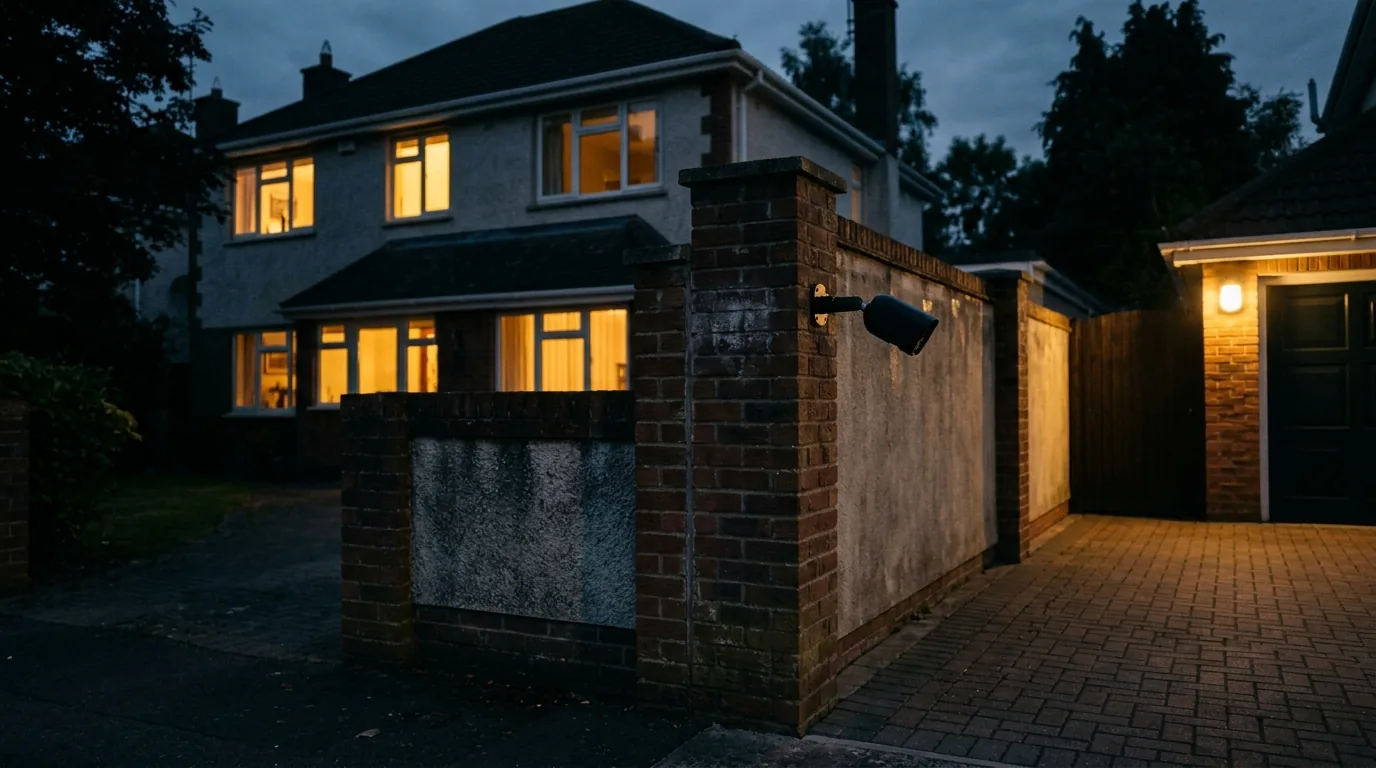
Cameras are not illegal, and nothing in POPIA stops you protecting your property. What the law does care about is what your cameras capture beyond your boundary, what you do with the recording afterwards, and whether the people being recorded have any way of knowing. Most disputes between neighbours, and most complaints inside complexes, come down to those three things.
The short version
- South Africa has no single national CCTV statute for homes. POPIA, the Constitution and sectional title law fill the gap.
- Recording a person is processing their personal information. That triggers POPIA obligations.
- A camera aimed permanently into a neighbour’s private space raises ordinary privacy and nuisance issues regardless of POPIA.
- Audio is treated more seriously than video, and is restricted under some municipal by-laws.
- In a sectional title scheme, the body corporate can make rules about common property — and should adopt a written surveillance policy.
What actually governs home CCTV
There is no dedicated national law that says where a homeowner may point a camera. Instead, three bodies of law overlap. The Protection of Personal Information Act governs the processing of personal information, which includes recording somebody’s image or voice. The Constitution protects privacy. And for people living in sectional title schemes, the Sectional Titles Schemes Management Act governs the use of common property and gives the body corporate rule-making power.
The practical consequence is that "is CCTV legal?" is the wrong question. Cameras are legal. The right questions are narrower: what is in frame, what happens to the recording, who can access it, and does anybody know it exists.
What POPIA actually asks of you
POPIA prohibits processing personal information without a lawful basis, and recording someone’s image or voice is processing. For a homeowner protecting their own property there is normally a legitimate-interest basis available. What POPIA then expects is proportionality: collect what you need for that purpose, keep it only as long as you need it, secure it, and be transparent about it.
Translated into an installation, that means a small number of concrete habits. Cameras aimed at what you are protecting rather than at everything. Signage where people can see it before they are recorded. A defined retention window rather than "until the drive fills". Access limited to people who have a reason to look. And a plan for what happens when someone asks for footage of themselves.
- Purpose: be able to say, in a sentence, why each camera exists.
- Proportionality: cover your property, not the street and the neighbour’s garden.
- Transparency: visible signage at approach points.
- Retention: a defined number of days, then overwritten.
- Security: password-protected recorder, no default credentials, restricted remote access.
- Access: know who can view and export, and keep that list short.
WSN note:The single most useful compliance habit is also a security habit: change the default recorder password and know who holds the new one.
Pointing a camera over the boundary
This is where most residential disputes start. A camera that unavoidably catches a slice of pavement while covering your gate is a very different thing from a camera permanently framed on a neighbour’s living room window or back garden. The first is incidental to a legitimate purpose. The second is surveillance of a private space, and ordinary privacy and nuisance law applies to it quite apart from POPIA.
The workable standard is intent and framing. If a camera can be re-aimed, masked or fitted with a narrower lens so that it covers your property properly and your neighbour’s private space poorly, that is what a reasonable installation does. Most modern recorders also support privacy masking — blanking a region of the frame permanently — which resolves a surprising number of arguments without losing any coverage you actually needed.
- 01Walk each camera view and write down what falls outside your boundary.
- 02Re-aim or change the lens where a neighbour’s private space is in frame.
- 03Apply privacy masking to areas you cannot exclude by aim alone.
- 04Tell the neighbour what you have done. Most complaints are about surprise, not cameras.
- 05Keep a note of the change — it is evidence of good faith if a dispute arises later.
Audio is a separate decision
Video and audio are not treated the same way. Recording a conversation is generally regarded as a greater intrusion than recording an image, and audio recording is restricted under some municipal by-laws — Johannesburg among them. Many cameras ship with microphones enabled by default, which means a homeowner can be recording audio without ever having decided to.
Unless there is a specific reason to capture audio, the safe and simple position is to disable it at the camera. It removes a category of risk entirely, and in practice audio adds very little to the evidentiary value of a residential system.
Complexes, estates and body corporates
Inside a sectional title scheme, the picture changes. The body corporate has authority to make rules governing the use of common property, and cameras that capture common areas fall within that. Crucially, this can apply even to a camera mounted within an owner’s own section: if it captures common property, scheme rules and the wider law still engage.
For the scheme itself, the recommended position is a written surveillance policy adopted by the body corporate. It should state the purpose of the surveillance, where cameras are, how long footage is kept, who is authorised to view it and in what circumstances, and how a resident requests access. Without that document, a scheme is running a substantial personal-information operation with no defensible framework around it.
- Confirm scheme rules before installing a camera that sees common property.
- For the scheme: adopt a written surveillance and privacy policy.
- State retention, access authority and the request process in that policy.
- Put signage at every entrance to the scheme, not only at the gatehouse.
- Keep an access log for footage exports — who took what, when, and why.
WSN note:For a body corporate, the surveillance policy is not paperwork for its own sake. It is what turns a shared camera system from a liability into a defensible asset.
When somebody asks for footage
Requests come from three directions: a resident or neighbour who appears in the footage, an insurer, and the police. Each deserves a considered answer rather than an improvised one.
A person has rights in relation to their own personal information, which includes footage of themselves. That does not create an unlimited right to browse your recordings, and it does not override other people’s privacy in the same frame. The workable approach is to have a stated process, respond within a reasonable time, and export narrowly — the specific incident window rather than a day of recording.
For police and insurers, keep it simple and documented. Export the specific window, note who received it and when, and keep your own copy. A short export log costs nothing and answers most questions that arise months later.
A compliant setup, practically
None of this requires a legal department. A residential system that would stand up to scrutiny looks much like a well-installed system that would stand up technically, which is the useful part.
| Area | What good looks like |
|---|---|
| Aim | Each camera covers a stated part of your property; neighbour private space masked |
| Signage | Visible notice at vehicle and pedestrian approach |
| Audio | Disabled unless there is a specific documented reason |
| Retention | A defined number of days, then automatic overwrite |
| Access | Named individuals, unique credentials, no shared default password |
| Remote access | Deliberate, secured, and reviewed when someone leaves the household |
| Exports | Narrow windows, logged, with a copy retained |
Common questions
Is it legal to install CCTV at my home in South Africa?
Yes. Cameras are not illegal. What the law regulates is what you capture beyond your property, what you do with the recordings, and whether people are given notice. POPIA, the Constitution and — in a scheme — sectional title rules all apply.
Can my camera record my neighbour’s property?
Incidental capture while covering your own boundary is different from a camera permanently framed on a neighbour’s private space. The second raises privacy and nuisance issues regardless of POPIA. Re-aim, change the lens, or apply privacy masking.
Do I need CCTV signage at a private home?
Transparency is a core POPIA principle, and visible signage at approach points is the simplest way to meet it. It is also a deterrent, which makes it worth doing on security grounds alone.
Can my body corporate stop me installing a camera?
A body corporate can make rules governing common property, and those rules can reach a camera inside your section if it captures common areas. Check the scheme rules before installing.
Should I record audio?
Generally no. Audio is treated as a greater intrusion than video and is restricted under some municipal by-laws. Unless there is a specific reason, disable microphones at the camera.