Keeping subscribers when nothing goes wrong
Armed response is a grudge purchase: invisible when it works, judged on price at renewal. How a branded app gives subscribers a reason to stay.
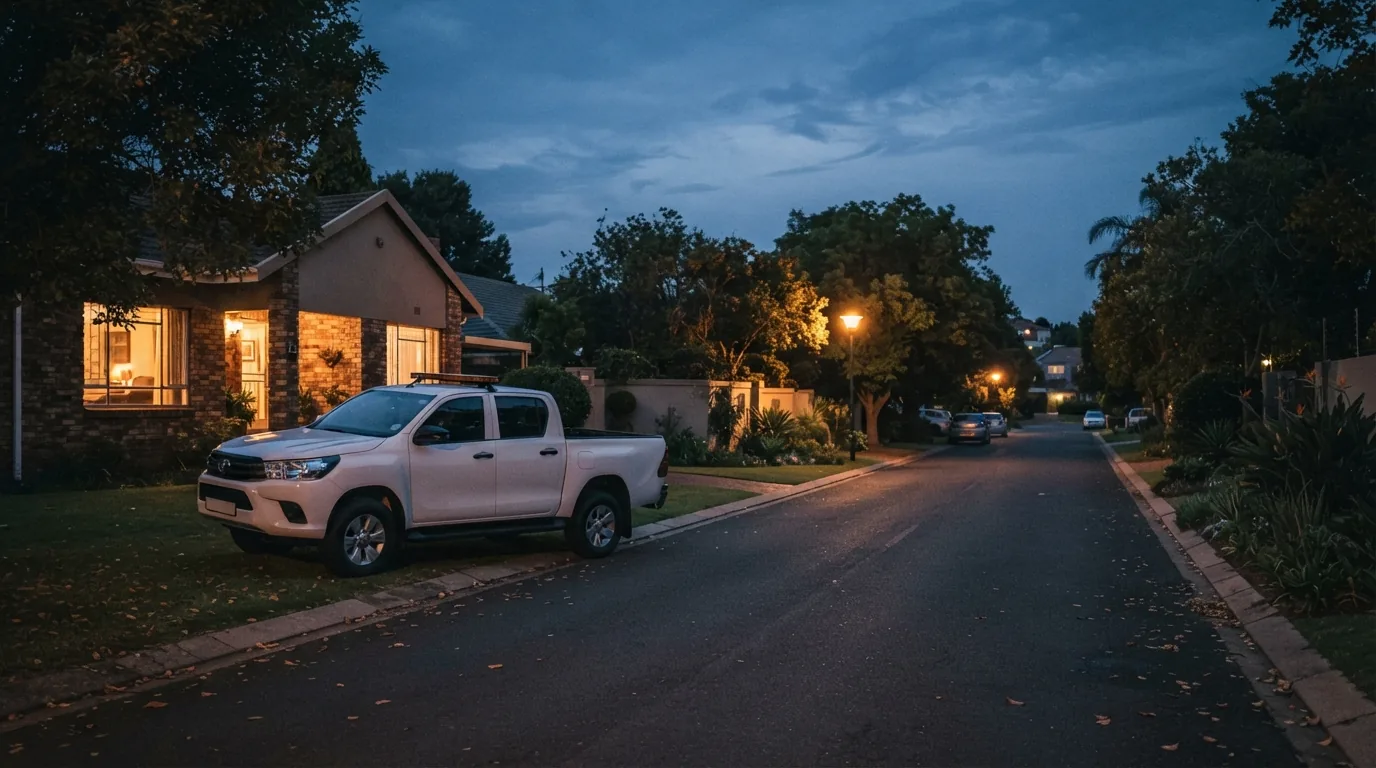
Armed response is a strange thing to sell. When it works, the subscriber sees nothing at all. Months go by with no break-in, no callout and no contact, and the only reminder that the service exists is the debit order. Then a competitor knocks on the door with a lower monthly fee, and a customer who has never needed you has no reason to stay.
The short version
- Subscribers rarely cancel because of a bad response. More often they cancel because they never experienced one, so price is the only thing left to compare.
- An app gives subscribers something to use when nothing is wrong: journeys, family check-ins, support requests and incident reports.
- Every time the app opens, your logo is on it. That is brand contact a debit order never provides.
- A subscriber who has loaded their medical details, vehicles and family into your app has a reason to think twice before leaving.
- Roll it out to a pilot group first, help them set it up properly, and watch whether app users cancel less than everyone else.
A service nobody sees
Most of what an armed response company does is invisible by design. Patrols happen while the subscriber sleeps. Alarm signals are handled in a control room they have never seen. A good month is one in which the subscriber has no contact with you whatsoever.
That is a good outcome for the subscriber and a difficult position for the business. When a service is invisible, its value has to be imagined, and imagined value loses to a real number on a competitor’s quote. Insurance has the same problem, which is why both are called grudge purchases: things people pay for reluctantly and question every time the price goes up.
There is a second, quieter problem. In many neighbourhoods and estates, subscribers talk to each other. When one household switches provider over price, the neighbours hear about it. A company can lose a street not because anything went wrong, but because nobody had a reason to defend it.
WSN note:If the only time a subscriber thinks about you is when the debit order clears, you are competing on price whether you mean to or not.
What subscribers actually pay for
Ask subscribers why they have armed response and the answer is rarely about vehicles or response times. It is about a feeling: that somebody is watching, that help will come, that the people they love are covered when they are not there to protect them.
That feeling is easy to wear down. A response that took long, a control room that did not know who the subscriber was, or a call that asked for an address the company should already have had, all chip away at it. So does silence. Peace of mind that is never reinforced slowly turns into a line item on a bank statement.
An app cannot fix a slow response. What it can do is turn the feeling into something the subscriber can see and use, many times a month, on ordinary days.
Reasons to open the app on an ordinary day
The features that keep subscribers are not the emergency buttons. Most subscribers will press panic rarely, if ever. What brings them back is everyday use, and WSN Guardian is built around it.
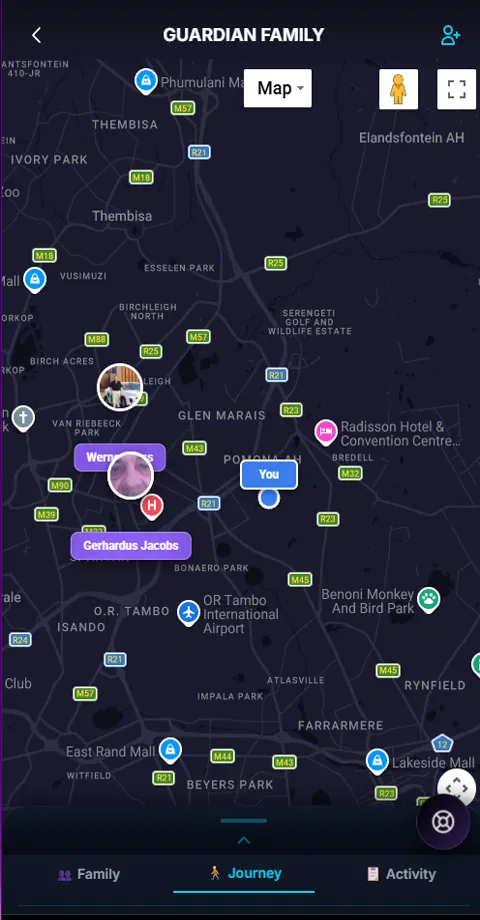
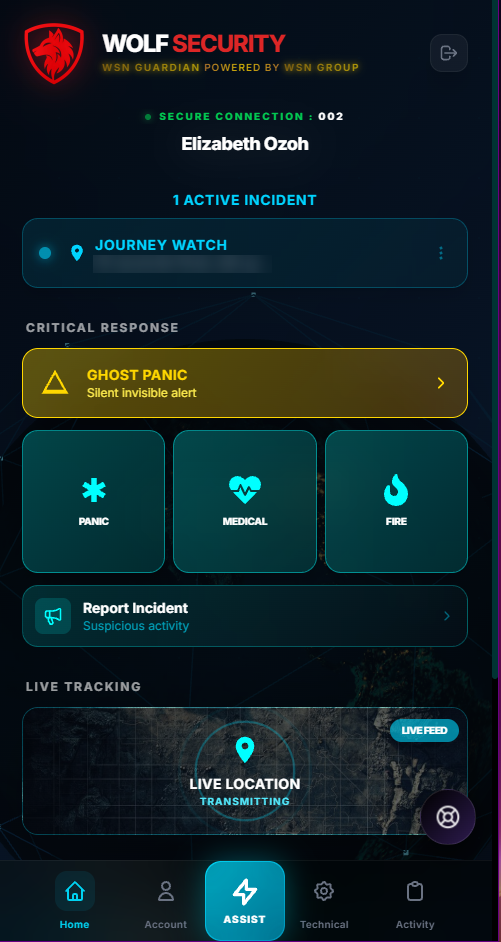
Journey Watch covers the trips people worry about: a teenager driving home late, a parent on a long drive, someone walking to a car after a late shift. The subscriber sets a destination and a time, family can follow the trip, and the control room can see it too. If the timer runs out before they arrive, the journey escalates on its own.
- Journey Watch for the school run, the late commute and the long drive.
- A family map with everyone’s location and phone battery in one place.
- Technical support over WhatsApp for alarm, CCTV and electric fence faults, so routine questions stay off the control room line.
- Incident reports for suspicious activity, which turn subscribers into extra eyes on the street.
- Guardian Hold for the walk to the car: hold the screen while safe, let go to raise the alarm.
- A realistic fake incoming call for leaving an uncomfortable situation, plus hands-free panic triggers.
WSN note:A subscriber who uses Journey Watch every week has a relationship with you. A subscriber who has never opened the app has a debit order.
Your name on their phone
Brand matters more than most response companies admit. Your vehicles carry your logo, but a subscriber sees one only when there is a callout. Their phone, on the other hand, is in their hand all day.
With a white-labelled platform, the app on the home screen is yours: your name, your logo, your colours. When a subscriber shows a friend how they followed their daughter’s drive home, it is your company they are showing off. That is word of mouth you could not buy with a billboard.
Compare that with sending subscribers to a third-party app. It may work well, but every time they open it they are reminded of somebody else’s brand, and the relationship you have built sits inside another company’s product.
Setting up is a reason to stay
Retention is not only about delight. It is also about effort. A subscriber who has entered their medical details, scanned the licence discs of their vehicles, added emergency contacts and invited their family has invested time in your platform. Switching provider means doing all of it again.
That same investment is what makes your response better. The control room sees a verified photo, the subscriber’s critical medical record and their vehicle details the moment an alert arrives, instead of asking for them in the middle of an emergency. The setup that keeps the subscriber is the setup that protects them.
The point is not to trap anyone. It is that a complete profile makes the service better every time it is used, and a subscriber who has felt that difference is far harder to win over on price alone.
Rolling it out to existing subscribers
A launch announcement on its own rarely works. Subscribers download the app, open it once and forget it. The companies that get value from an app treat the rollout as a service visit rather than a marketing email.
- 01Start with a pilot group: one estate, one suburb, or the subscribers who already ask you for more.
- 02Help each household set up properly: a photo, medical details, emergency contacts, vehicles and family members.
- 03Show them one everyday feature that fits their life, such as Journey Watch for a child who has just started driving, rather than a list of everything.
- 04Explain the silent options in person. Ghost Panic, the duress PIN and the hands-free triggers only help if people know they exist.
- 05Follow up after a few weeks and ask what they used. Their answers tell you what to lead with for everyone else.
- 06Extend it to the rest of your subscribers, using what the pilot taught you.
WSN note:Treat setup as part of the service. One profile completed with your help is worth more than ten app-store downloads.
How to tell if it is working
Retention takes months to show, so decide at the start what you will watch. The simplest measure is the one that matters most: over the same period, do subscribers who use the app cancel less often than those who do not?
Alongside it, watch how many subscribers complete their profile, how many use an everyday feature, and how many routine questions move from the phone line to WhatsApp. If those numbers rise while cancellations among app users fall, the app is doing its job.
| What to measure | Why it matters |
|---|---|
| Cancellations: app users against non-users | The direct test of whether the app keeps subscribers. |
| Profiles completed | A complete profile improves every response and raises the cost of leaving. |
| Everyday feature use | Shows whether subscribers see value on days with no emergency. |
| Support requests over WhatsApp | Routine questions handled without tying up the control room. |
| Incident reports from subscribers | Subscribers acting as eyes on the street. |
Common questions
Does an app replace the panic button on the alarm panel?
No. Fixed panic buttons and alarm panels still protect the house. The app covers the subscriber wherever their phone is, which is exactly where a fixed button cannot reach: in the car, at the gate, in a parking garage or on a walk.
Can we charge subscribers for the app?
That is a commercial decision for each company. Some will include it to protect the subscribers they have; others will use it to justify a premium tier. Either way, it gives subscribers something tangible for their monthly fee.
Will our subscribers see the WSN name?
The app, the control room and the admin portal carry your name and logo. WSN Guardian appears only as a small “powered by” line beneath your brand.
What happens if a subscriber raises an alert outside our service area?
Guardian lets you set your service area, and operators can see whether an incident falls inside it. A subscriber who raises an alert outside it is told to call emergency services directly, so nobody waits for a response that cannot come.
How do we get started?
With a conversation. Every white-label setup depends on the company asking for it, so there are no fixed packages. WhatsApp us and we will show you the platform running under a demo brand.