POPIA and panic apps: getting subscriber data right
A safety app holds addresses, live locations and medical details. What POPIA expects of the response company offering one, and what to ask the platform.
A panic app is one of the most personal things a security company can offer. To do its job it needs to know where a subscriber lives, where they are right now, what they drive, who their family is and what a paramedic should know about their health. Under the Protection of Personal Information Act, every one of those is personal information, and some of it is the most sensitive kind the Act recognises.
The short version
- The response company offering the app is normally the responsible party under POPIA. The platform processing data on its behalf is an operator, and the Act requires a written contract between them.
- Health information is special personal information. Processing it is prohibited unless an exception applies, and for a safety app the practical route is the subscriber’s consent.
- Live location is intrusive. Be clear about when it is shared and with whom, and collect no more than the purpose needs.
- Access should follow the job: operators see what an incident needs, administrators manage the system, and actions are recorded.
- This is general information, not legal advice. Talk to your information officer or a POPIA practitioner about your own setup.
What a safety app actually holds
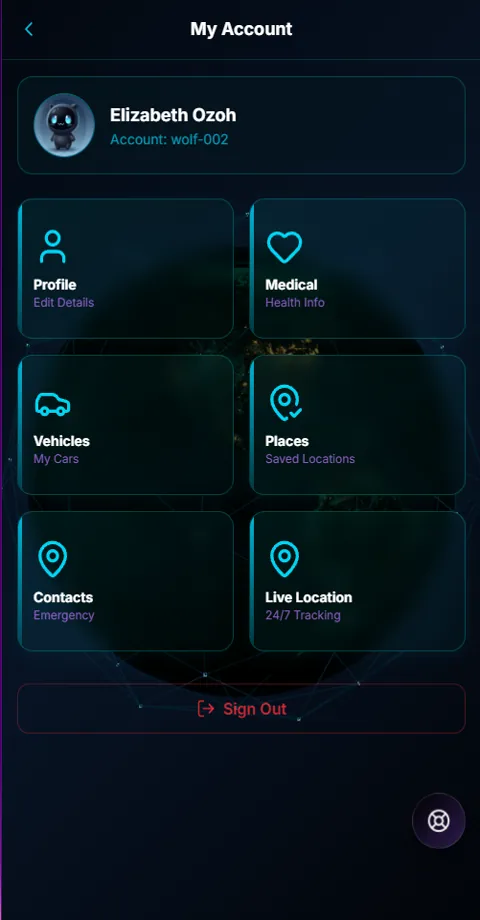
Before thinking about compliance, list what the app collects. For a typical subscriber that includes their name, contact details and home address, saved places, live location during incidents and journeys, a photo for identification, vehicle details, emergency contacts, family members and a medical record.
Each item is there for a reason. The photo identifies the subscriber to responders, the medical record informs paramedics, the vehicle details help in a hijacking. POPIA does not object to any of that. It asks that each item is collected for a defined purpose, kept no longer than necessary, protected properly, and handled openly with the people it concerns.
| Information | Why the app needs it | How POPIA sees it |
|---|---|---|
| Name, contact details, address | Identify the subscriber and where to respond | Personal information |
| Live location | Find the subscriber during an incident or journey | Personal information, and highly intrusive |
| Photo | Positive identification by responders | Personal information |
| Vehicle details | Describe the vehicle in a hijacking | Personal information |
| Emergency contacts and family | Notify and coordinate | Other people’s personal information |
| Medical record | Inform paramedics and responders | Special personal information |
| Operator notes and client flags | Warn the next operator and responder, such as vicious dogs on the property | Personal information; a flag about someone’s health is special personal information |
Who is responsible: you, or the platform?
POPIA separates two roles. The responsible party decides why and how personal information is processed. An operator processes it on the responsible party’s behalf, under a contract or mandate, without coming under its direct authority.
When a response company offers a white-labelled app to its subscribers, the response company is normally the responsible party: the subscribers are its clients and the purpose is its service. The platform provider that hosts and runs the software is an operator.
That has two consequences. First, the response company remains accountable for how its subscribers’ information is handled, even though another company’s software holds it. Second, section 21 of the Act requires a written contract that ensures the operator maintains appropriate security measures, and separately obliges the operator to notify the responsible party immediately when there are reasonable grounds to believe information has been accessed or acquired by an unauthorised person.
WSN note:Ask for the operator agreement before you sign the commercial one. If a platform cannot explain how it protects your subscribers’ data, it is not ready to hold it.
Medical details are special personal information
Section 26 of POPIA prohibits processing special personal information, a category that includes information about a person’s health, unless one of the exceptions in the Act applies. The most practical exception for a safety app is in section 27: the data subject has consented.
Consent under POPIA means a voluntary, specific and informed expression of will. For a medical record in a panic app, that means telling subscribers plainly what will be stored, who will see it and why, and letting them choose. It also argues for making medical fields optional. A subscriber who prefers not to share a condition should still be able to use everything else.
In Guardian, subscribers maintain their own medical record from their profile screen. Anything they choose not to fill in appears to operators as not disclosed, and they can update their details whenever their circumstances change.
Location: collect what the purpose needs
Live location is what makes a safety app useful, and it is also the most intrusive thing it collects. POPIA’s minimality condition, in section 10, requires processing to be adequate, relevant and not excessive for its purpose. Following a subscriber during an incident or an active journey is easy to justify. Tracking them around the clock needs a stronger reason, and should be the subscriber’s own choice.
Be explicit about when location is shared and with whom. During a panic or a journey, the control room sees it. In a family circle, members see each other because each person chose to share. Make those choices visible in the app and in your privacy notice, and make sure operators understand that access to a subscriber’s location is for responding, never for curiosity.
Access control and the audit trail
Section 19 requires appropriate, reasonable technical and organisational measures to prevent the loss of personal information and unlawful access to it. In a control room, the organisational half matters as much as the technical half. Who can see a subscriber’s medical record? Who can export data? Who can create operator accounts?
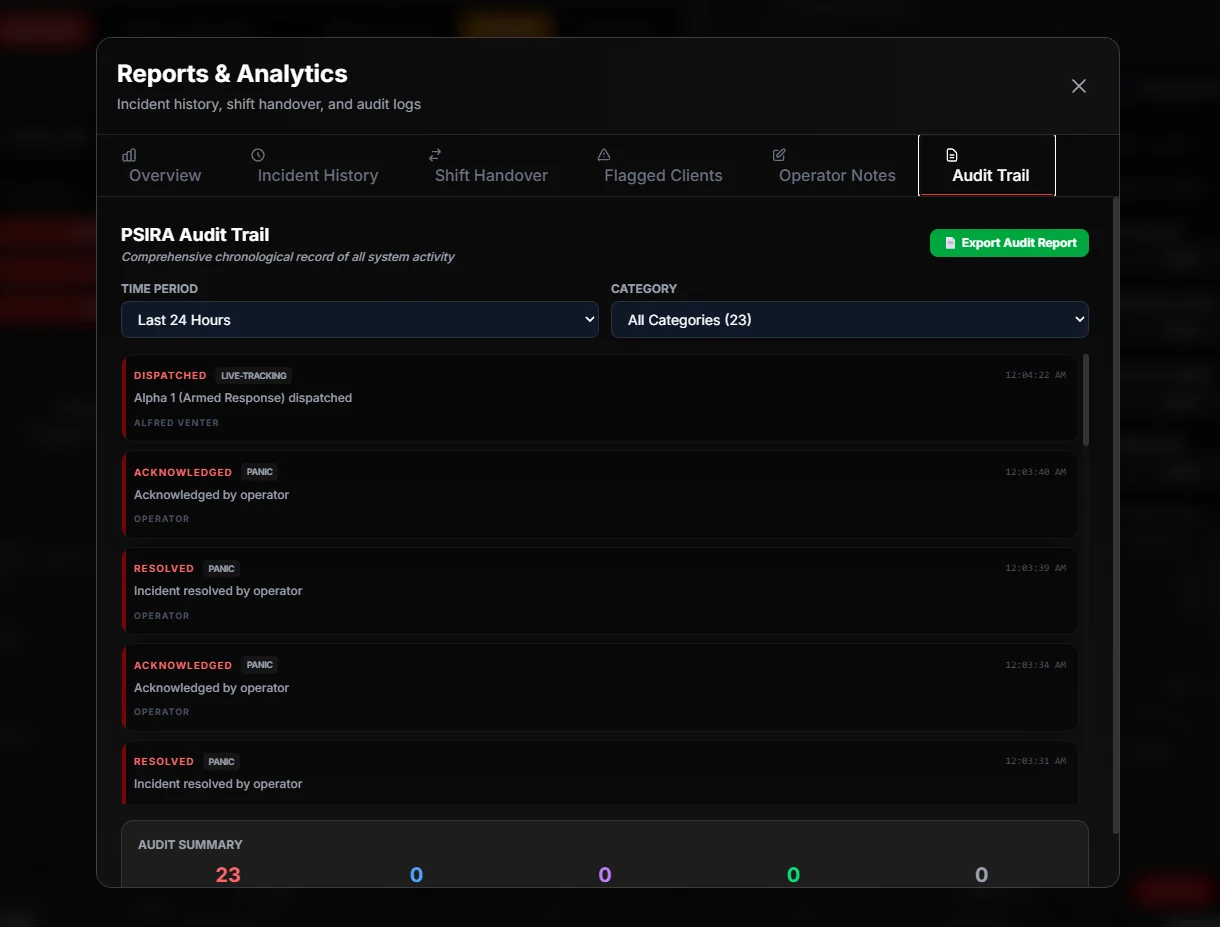
A good platform separates these roles. In Guardian, administrators and operators have different access: administrators manage operators and the system, operators handle incidents. Each partner company’s subscribers are kept separate from every other partner’s. And an audit trail records actions with the time and the person, which is how you answer the question every investigation eventually asks: who did what, and when?
When something goes wrong
Section 22 requires the responsible party to notify the Information Regulator, and the people affected, as soon as reasonably possible after discovering that personal information has been accessed or acquired by an unauthorised person. For a response company, a lost operator laptop, a shared password or a compromised account can all trigger that duty.
Plan for it before it happens. Decide who in the business determines whether a compromise has occurred, how your platform provider will tell you, and how you will contact subscribers. Your information officer, who must be registered with the Information Regulator, should own that plan.
A launch checklist
Before you offer a panic app to subscribers, work through these with your information officer.
- 01Sign a written operator agreement with the platform provider that covers security measures and breach notification.
- 02Ask where the data is stored. If it is held outside South Africa, check that the transfer meets the conditions in section 72.
- 03Update your privacy notice to cover the app: what it collects, why, who sees it and how long it is kept.
- 04Collect explicit consent for medical information, and keep medical fields optional.
- 05Explain location sharing clearly, in the app and when you onboard subscribers.
- 06Set up roles so operators see only what incidents require, and keep administrator access to a few people.
- 07Train operators that notes and flags are personal information too: write them factually, and treat any that concern a person’s health as special personal information.
- 08Decide how long resolved incidents and recordings are kept, and write down why.
- 09Write down your breach response, including how the provider will notify you.
WSN note:No platform can make you compliant on its own. Compliance is how you run it, and a good platform makes the right way the easy way.
Common questions
May a response company store subscribers’ medical information at all?
Yes, if an exception to the prohibition on processing special personal information applies. For a safety app the practical basis is the subscriber’s consent, which must be voluntary, specific and informed. Explain what is stored and why, and let subscribers choose.
Who is responsible if the platform provider suffers a breach?
The response company, as responsible party, remains accountable for its subscribers’ information. That is why POPIA requires a written contract on the operator’s security measures, and obliges the operator to notify you immediately of a suspected compromise.
Do family members need to agree to share their location?
Each family member’s location is their own personal information, so each should join by their own choice and control their own sharing. In Guardian, sharing your location with the family circle is a setting each person controls.
Is this legal advice?
No. It is general information to help you ask the right questions. Speak to your information officer or a POPIA practitioner about your own circumstances.